



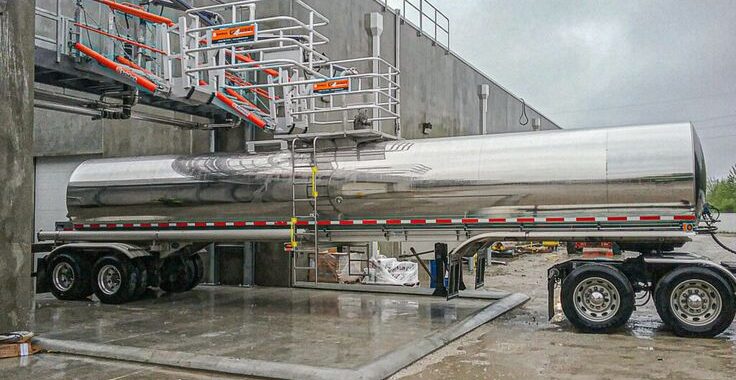
The fuel loading and unloading terminal is a critical infrastructure point in global petroleum logistics where fuel is transferred between transport modes such as ships, pipelines, railcars, trucks, and storage tanks. These terminals function as operational gateways that ensure crude oil and refined products move efficiently through the international supply chain.
This article is written for energy buyers, logistics managers, traders, and procurement professionals who need a clear, structured understanding of how fuel loading and unloading terminals operate. It addresses a key operational challenge: how to manage the physical transfer of fuel safely, efficiently, and in compliance with strict regulatory standards.
For buyers sourcing directly from U.S. refineries, understanding these terminals is essential because they represent the transition point where ownership, custody, and physical control of fuel are transferred—often determining cost, risk exposure, and delivery reliability.
fuel loading and unloading terminal: system overview and function
The fuel loading and unloading terminal system is designed to handle bulk petroleum transfers between different transportation and storage systems. These terminals exist at ports, refineries, inland depots, and distribution hubs.
Core functions
Fuel terminals perform several key roles:
- Loading fuel into ships, trucks, railcars, or pipelines
- Unloading fuel from incoming transport vessels
- Temporary storage of petroleum products
- Blending and quality adjustment
- Custody transfer measurement
These functions ensure continuity in global fuel supply chains.
Role in global energy infrastructure
Fuel terminals act as transition points between:
- Refinery output and export logistics
- Maritime shipping and inland distribution
- Storage facilities and end-user markets
Without these terminals, global petroleum trade would not be operationally viable.
For broader infrastructure context and storage systems, see https://gastanks.nl/ and company overview at https://gastanks.nl/about/. These illustrate how integrated fuel handling systems support international logistics. Operational coordination is typically handled via https://gastanks.nl/contact/.
Infrastructure of fuel loading and unloading terminal systems
The efficiency of a fuel loading and unloading terminal depends on highly engineered infrastructure designed for safety, accuracy, and high-volume throughput.
Storage and tank systems
Terminals are connected to storage facilities that include:
- Fixed-roof tanks for stable petroleum products
- Floating-roof tanks for volatile fuels
- Segregated tanks for different fuel grades
- Heated tanks for heavy fuel oils
These systems maintain product integrity between transfers.
Loading and unloading equipment
Key equipment includes:
- Marine loading arms for ship transfer
- Pumping stations for controlled flow
- Truck and rail loading racks
- Pipeline manifolds for distribution
These systems allow fuel to move efficiently across multiple transport modes.
Measurement and control systems
Accuracy is ensured through:
- Custody transfer meters (for ownership verification)
- Automated flow monitoring systems
- Pressure and temperature sensors
- Real-time inventory tracking
These systems reduce disputes and ensure transparency in transactions.
fuel loading and unloading terminal: operational workflow
The operational process in a fuel loading and unloading terminal follows a structured sequence designed to ensure safety and efficiency.
Step 1: Arrival and inspection
Fuel arrives via:
- Tanker ships
- Pipelines
- Rail or truck transport
Upon arrival, it undergoes:
- Quality testing
- Volume measurement
- Documentation verification
Step 2: Unloading or storage transfer
Fuel is transferred into storage tanks using:
- Pump systems
- Pipeline connections
- Controlled discharge systems
Step 3: Storage management
Stored fuel is continuously monitored for:
- Temperature stability
- Contamination prevention
- Inventory accuracy
Step 4: Loading for distribution
Fuel is loaded into:
- Ships for export
- Barges for inland waterways
- Trucks and railcars for regional delivery
This step often includes blending or conditioning to meet specifications.
Pricing and contract structures
Pricing in a fuel loading and unloading terminal environment reflects both global commodity markets and local logistics costs.
Key cost components
Total costs typically include:
- Commodity price (Brent or WTI benchmark)
- Terminal handling fees
- Storage charges
- Loading/unloading fees
- Transport and insurance costs
Contract types
Common structures include:
- Spot contracts for immediate delivery
- Term contracts for long-term supply
- Throughput agreements for handling services
- Storage leasing contracts
These arrangements define cost responsibility and operational access.
Market pricing data is influenced by:
- U.S. Energy Information Administration — https://www.eia.gov
- International Energy Agency — https://www.iea.org
- OPEC — https://www.opec.org
Regulatory and compliance framework
Fuel loading and unloading terminals operate under strict regulatory oversight due to environmental and safety risks.
International and U.S. regulatory standards
Terminals must comply with:
- Environmental protection laws
- Hazardous materials regulations
- Maritime safety standards
- Customs and trade compliance rules
Inspection and certification requirements
Every transfer involves:
- Independent inspection reports
- Quality certification
- Volume verification
- Customs documentation
Safety systems
Terminals are equipped with:
- Fire suppression systems
- Spill containment structures
- Leak detection sensors
- Emergency shutdown systems
These safeguards are essential for preventing accidents and environmental damage.
Opportunities for buyers
The fuel loading and unloading terminal system provides several strategic advantages.
Efficient global access
Buyers can:
- Source fuel from multiple regions
- Access global shipping routes
- Store fuel strategically before delivery
Flexibility in logistics
Terminals enable:
- Timing optimization for purchases
- Multi-modal transport selection
- Inventory management flexibility
Market arbitrage opportunities
Buyers can benefit from:
- Regional price differences
- Seasonal demand shifts
- Storage-based trading strategies
Risks and common mistakes
Despite its efficiency, the system involves several risks.
Operational risks
These include:
- Product contamination
- Measurement discrepancies
- Equipment failure during transfer
Documentation errors
Common issues include:
- Incorrect customs paperwork
- Missing inspection certificates
- Incomplete cargo documentation
Counterparty risks
Buyers must verify:
- Terminal operator credibility
- Storage availability claims
- Contract enforceability
Logistics realities and operational challenges
Fuel terminals operate under real-world constraints that affect performance.
Congestion and delays
High demand can result in:
- Terminal congestion
- Vessel waiting times
- Increased demurrage costs
Coordination complexity
Operations require coordination between:
- Shipping companies
- Terminal operators
- Inland transport providers
Environmental constraints
Terminals must manage:
- Emissions controls
- Spill prevention
- Waste handling requirements
These increase operational complexity and cost.
Market outlook and future trends
The fuel loading and unloading terminal sector is evolving alongside global energy changes.
Continued global fuel demand
Despite energy transition trends, petroleum demand remains strong due to:
- Industrial consumption
- Transportation needs
- Aviation and shipping sectors
Digital transformation
Emerging technologies include:
- Automated loading systems
- Real-time tracking platforms
- Blockchain-based transaction records
Energy transition adaptation
Terminals are increasingly handling:
- Biofuels
- Low-sulfur fuels
- Alternative energy carriers
Industry insights from:
- Reuters Energy — https://www.reuters.com/business/energy/
- OilPrice — https://oilprice.com
highlight ongoing modernization.
Supply chain reliability and risk mitigation
Reliable terminal operations are essential for global fuel stability.
Diversified sourcing strategies
Buyers should:
- Source from multiple regions
- Avoid dependency on single suppliers
- Use flexible contracts
Infrastructure coordination
Efficient logistics depend on integrated storage and transport systems. Facilities such as those referenced at https://gastanks.nl/ demonstrate how infrastructure supports global fuel distribution. Additional context is available at https://gastanks.nl/about/, with coordination through https://gastanks.nl/contact/.
Risk management practices
Effective strategies include:
- Insurance coverage for cargo
- Independent inspection services
- Continuous supply monitoring
Conclusion
The fuel loading and unloading terminal is a foundational component of global petroleum logistics, enabling the safe and efficient transfer of fuel between transport modes and storage systems.
For buyers, traders, and logistics professionals, understanding how these terminals operate is essential for managing costs, ensuring compliance, and reducing operational risk. From U.S. refinery exports to global distribution networks, these terminals serve as critical control points in the energy supply chain.
As global energy systems evolve, fuel loading and unloading terminals will continue to adapt—integrating new technologies, improving efficiency, and supporting both traditional petroleum flows and emerging energy alternatives.